

Content
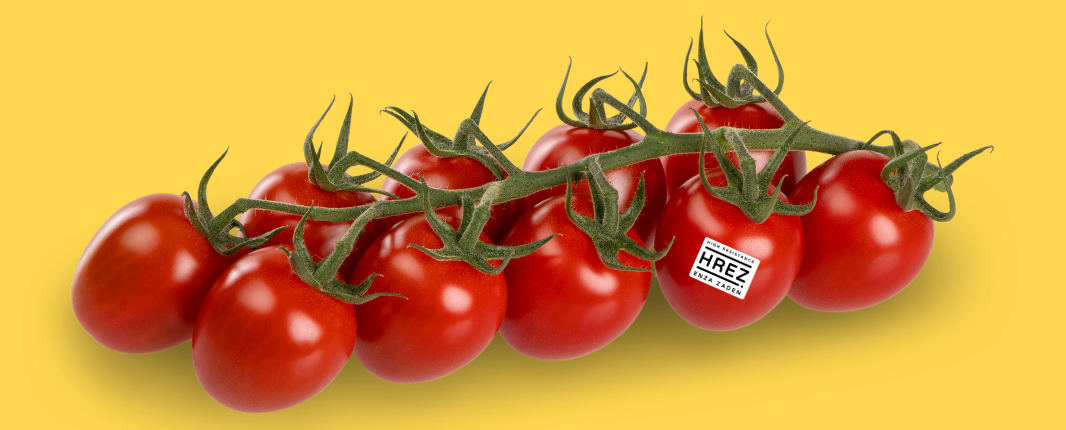
In this series, our Senior Researcher Phytopathology Manus Thoen takes on the myths that spread just as fast as the virus itself. Together with experts from our breeding, diagnostics, pathology, and molecular biology departments, he unpacks common misconceptions about HREZ, Enza Zaden’s High Resistance to ToBRFV.
If you do not see a video above, please accept our cookies. You can chane consent via the icon in the left bottom corner of this page
In this episode, Manus explores the assumption that stacking multiple resistance genes automatically creates a stronger defence. He explains why tomato breeding has long relied on single, strong dominant genes such as ToMV, Fol, Pf, and now HREZ — not because stacking is avoided, but because one well performing dominant gene often outperforms a combination of weaker recessive ones. .
Expert researcher Sergio shares how dominant genes deliver clarity and durability in practice, while Molecular researcher Nejra shows how molecular markers make them clean and efficient to track, unlike recessive stacks that slow breeding down and risk carrying unwanted wild DNA.
Biotechnology expert researcher Jeroen adds the mechanistic perspective, explaining why HREZ’s clean recognition makes it a solid foundation for future multigene strategies. Together, they examine when stacking truly adds value — and when a single strong gene is the better tool.
Strong decisions start with solid information. By combining what we know from breeding, research and agricultural practice, this series cuts through the noise and highlights what truly matters for managing ToBRFV in modern tomato production.