Written by Manus Thoen, Senior Researcher Biotic Trait Discovery
This myth makes intuitive sense. If we finally have a strong resistance like HREZ, why keep investing time and money in hygiene routines? Why disinfect tools, limit movement, or clean trays if the plant can fight the virus on its own? It feels logical. It feels efficient. But as we have seen throughout this series, intuition and biology do not always point in the same direction.
We have come a long way
Let me start with a confession. I am a phytopathologist, which means my professional superpower is killing plants on purpose. Growing them is something my grandfather understood far better than I ever will. At Enza Zaden, we talk a lot about being a family company that thinks in generations, and that philosophy feels very real to me when I look at the old photo of him in his greenhouse. It is the 1960s, he is surrounded by baskets of tomatoes, a few friends, one of them smoking tobacco. What could be the harm in that? A different era indeed. No diagnostics. No molecular markers. No global virus alerts. Just trust in the seed, the crop and the season ahead.
My grandfather, Nico Enthoven, in the middle of this picture. Somewhere in the 1960s. Baskets full of tomatoes, a cigarette in hand, and a greenhouse culture where “hygiene” meant brushing off your shirt before lunch.
Today, everything is different. We understand viruses better. We understand resistance better. And throughout this myth debunking series, we have built a clearer picture of how HREZ actually works.
All of these insights lead naturally to this final chapter. Hygiene. Because everything we have learned so far points to one conclusion: resistance is powerful, but pressure shapes the outcome.
Resistance is not immunity
HREZ gives the plant a strong, active defense, but it does not prevent the virus from landing on the plant or entering the first cell. The greenhouse environment still matters. Resistance handles the virus inside the plant. Hygiene handles everything before it gets there.
Sergio de la Fuente van Bentem, Expert Researcher Phytopathology
“Resistance means the plant can fight the virus after it enters. Immunity, where the ToBRFV cannot enter at all, does not exist in tomato.
With HREZ, the plant actively blocks ToBRFV from spreading internally, but that does not mean the virus disappears from the greenhouse. In order to get the best out of this High Resistance, we need hygiene! ”
Hygiene as the first line of defense
Good hygiene is not about perfection. It is about reducing the number of times the virus gets the chance to try. Every uncleaned tool, every reused tray and every glove that touches multiple plants is a new opportunity for ToBRFV to move. Clean tools. Clean hands. Clean movement between compartments. These simple habits keep pressure low and allow HREZ to perform at its best.
Bas Olsthoorn, Sales Manager Benelux and Scandinavia
“Growers do not need complicated systems.
They need consistent habits.”
What the data shows
Research on ToBRFV gives a practical message for growers. Samarah et al. (2020) showed that when tomatoes become infected, the virus sticks to every seed, even when the fruit looks normal, and it stays there unless you actively remove it. The same study also showed that proper disinfection can completely eliminate the virus and even improve germination, which tells us that starting clean is possible, but never automatic. Once ToBRFV is present, it behaves like a stubborn hitchhiker, clinging to surfaces, tools, gloves and trays with surprising persistence.
Skelton et al. (2023) found that the virus can survive for hours on hands and for days to months on common greenhouse materials, and that ordinary handwashing or mild cleaning is not enough to remove it.
For growers, the translation is simple. If the virus can survive the entire journey from fruit to seed to seedling and then linger on equipment long after a workday ends, it can easily move through a greenhouse unless hygiene is taken seriously. Clean starting material reduces the number of infection attempts on day one, and clean tools and hands reduce the number of infection attempts every day after that. The fewer chances the virus gets, the more reliably HREZ can do its job.
Conclusion: the power of synergy
This blog is not about what exact measures you can take to have your hygiene in order. That is neither my expertise, nor my responsibility. In retrospect, I should have paid closer attention when my granddaddy was telling stories of the good old days, back when I was a wee boy.
This blog is about HREZ, and how it related to hygiene. HREZ is strong. Hygiene is essential. And the growers who combine them are the ones who stay ahead of ToBRFV.
Martijn van Stee, Crop Breeding Manager
“When hygiene slips, virus pressure does not just increase. It creates the perfect feeding ground for new mutations. And that is not something any resistance gene, including HREZ, can handle alone. Hygiene protects the resistance, and the resistance protects the crop. You need both if you want to stay ahead of ToBRFV.”
This is the synergy that defines modern tomato production. Resistance keeps the virus from spreading inside the plant. Hygiene keeps the virus from arriving in the first place.
Together, they protect your crop, your season and the durability of HREZ for the years ahead.
Descriptions, recommendations and illustrations in brochures and leaflets shall correspond as closely as possible to tests and practical experience and are subject to typographical and/or printing errors. This information shall be provided to assist professional growers and users, whereby variable local conditions must be taken into account. Under no circumstances shall Enza Zaden accept liability based on such information for deviating results in the cultivated product. Current information concerning the resistances is available on www.enzazaden.com.


 Written by Manus Thoen, Senior Researcher Biotic Trait Discovery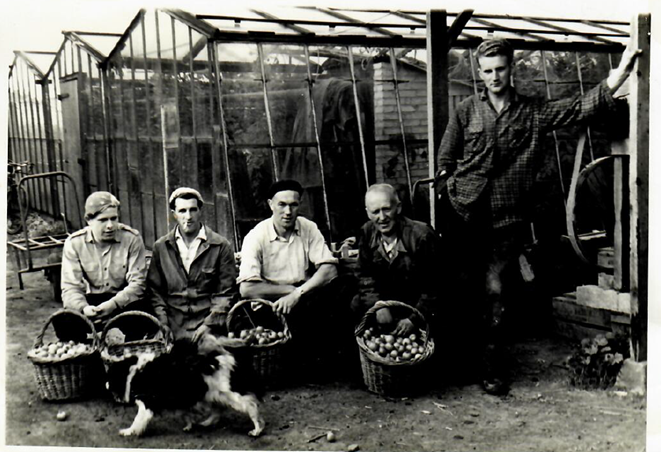
 Sergio de la Fuente van Bentem, Expert Researcher Phytopathology
 Martijn van Stee, Crop Breeding Manager