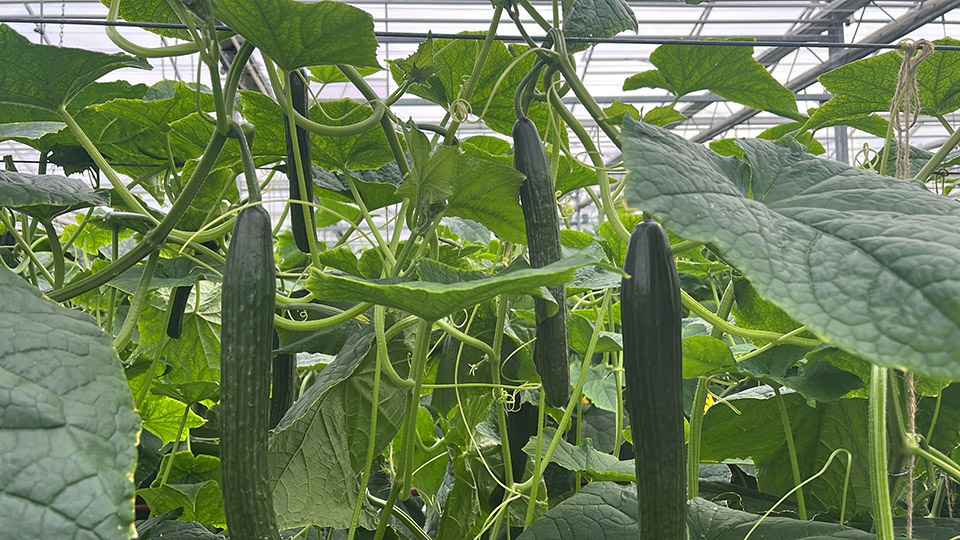
As Cucumber green mottle mosaic virus becomes more relevant across cucumber-producing regions, resistance is moving from an additional trait to an increasingly important part of crop protection. For growers, its value is ultimately about protecting the potential of the crop.
What is CGMMV?
Cucumber green mottle mosaic virus, or CGMMV, is an important disease threat in cucumber production. Once introduced into the crop, the virus can spread rapidly and outbreaks can result in significant yield reductions. In severe situations, the consequences can extend to the loss of an entire crop.
That makes CGMMV much more than a technical plant-health issue. It represents a potential risk to what growers ultimately depend on: a healthy, marketable crop and the ability to protect the value of their production.
Why does resistance matter?
For growers, CGMMV resistance provides an additional layer of protection against one of the important virus threats facing cucumber crops.
Its value is straightforward: helping reduce the risk of infection and safeguarding yield potential. Resistance does not replace good hygiene and strict biosecurity. Instead, it complements these measures as part of an overall approach to crop protection.
Resistance should not be presented as a promise that CGMMV is no longer a concern. It is a tool that can help growers manage that concern.
The experience in the North American greenhouse cucumber market illustrates the value well. As CGMMV outbreaks increased in high-tech greenhouse production, growers faced yield reductions, fruit-quality issues and difficulties eliminating the virus once established in a facility. Consequently, the customer need evolved beyond yield and fruit quality alone to include greater risk reduction and business continuity.
And this leads to an important principle for breeding: disease protection should not mean compromising the other characteristics growers need.
“The strongest resistant varieties are those for which growers do not feel they are trading agronomic performance for disease protection.”
How is Enza Zaden tackling the challenge?
The starting point is understanding how the challenge is evolving in growers' fields.
As CGMMV pressure grows in key markets, our breeding teams continue to integrate resistance into cucumber varieties, aiming to give growers greater protection without compromising the quality and performance they rely on.
Ultimately, the goal is simple: combine resistance with the characteristics growers already expect from a strong cucumber variety, so that added protection strengthens the crop rather than requiring a compromise elsewhere.
This approach is already reflected in our growing portfolio of CGMMV-resistant cucumber varieties, developed for different production systems, markets and cucumber segments.
A familiar shift: the parallel with ToBRFV
There is a useful parallel with the tomato industry's experience with Tomato brown rugose fruit virus, or ToBRFV.
The diseases and crops are different, but they illustrate a similar change in how the industry looks at resistance. In markets strongly affected by either virus, resistance has moved from a "nice-to-have" characteristic to a "must-have". As that happens, resistance starts to influence not only variety choice, but also breeding investment and portfolio strategy.
The comparison also brings an important lesson: resistance works as part of a wider disease-management approach, not in isolation.
CGMMV therefore reinforces the wider idea behind Resistance Makes the Difference. Resistance is valuable not simply because it is another characteristic in a variety, but because of what it can help growers protect: their crop, their yield potential and ultimately the value of their production.
Why is CGMMV becoming increasingly relevant?
The importance of CGMMV is becoming visible across different production systems and regions.
In high-tech production systems where interplanting is common, strong resistance can help reduce the risk associated with virus transmission between older crops and new plantings. But CGMMV is not exclusively a high-tech challenge. In other production systems such as non-heated greenhouses, for example, disease pressure is sufficiently high that resistance has become a key requirement for introducing new varieties, especially in some specific cucumber segments.
A similar shift can be seen in other professional cucumber markets. In regions with year-round cucumber production and multiple crop cycles, virus resistance is increasingly considered an important component of crop security. In some countries, growers are already reluctant to grow or even trial new material without virus resistance.
"It is no longer simply one desirable characteristic among many. In markets facing significant CGMMV pressure, it is becoming part of what growers expect from a complete cucumber variety."
Descriptions, recommendations and illustrations in brochures and leaflets shall correspond as closely as possible to tests and practical experience and are subject to typographical and/or printing errors. This information shall be provided to assist professional growers and users, whereby variable local conditions must be taken into account. Under no circumstances shall Enza Zaden accept liability based on such information for deviating results in the cultivated product. Current information concerning the resistances is available on www.enzazaden.com.


 Back to overview

 Cucumber green mottle mosaic virus, or CGMMV, is an important disease threat in cucumber production. Once introduced into the crop, the virus can spread rapidly and outbreaks can result in significant yield reductions. In severe situations, the consequences can extend to the loss of an entire crop.