Research and collaboration, key in the fight against ToLCNDV
Turning grower challenges into research-driven solutions through global collaboration and innovation
When people think about innovation in vegetable breeding, they often picture a new variety arriving on the market. What they do not always see is the journey behind it: the years of observations, testing, collaboration and learning that make that innovation possible.
Our Senior Researcher, Frederic Perefarres, explains that the work on Tomato Leaf Curl New Delhi Virus (ToLCNDV) is exactly that kind of story.
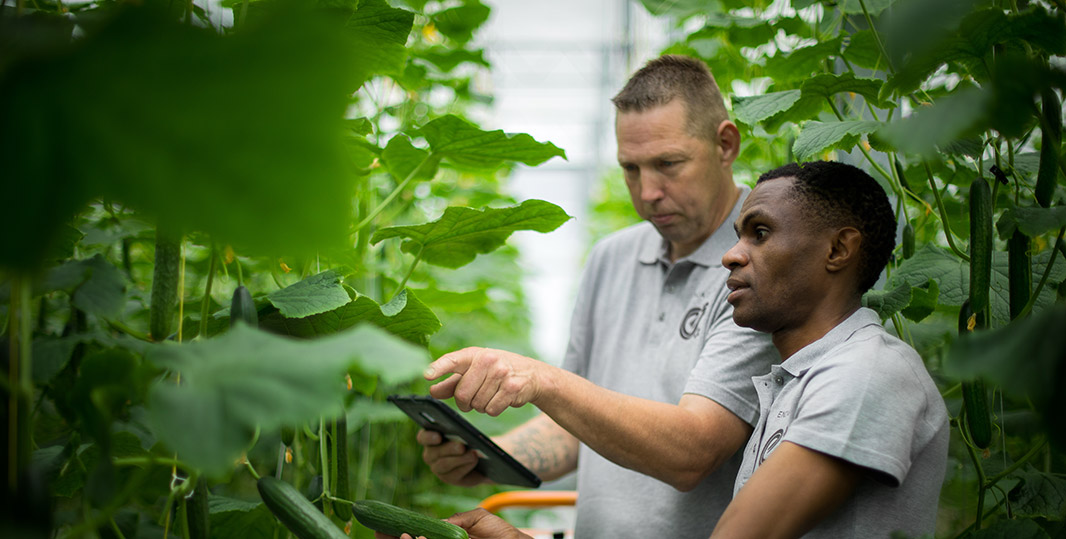
“As a plant pathologist working across cucurbit crops, I have been fortunate to contribute to activities in melon, cucumber and pumpkin, working closely with colleagues in Spain, the Netherlands and Malaysia. While the crops are different and the growing environments vary significantly, the challenge has always been the same: how do we help growers stay productive when disease pressure continues to evolve?” he states.
A Challenge That Connects Crops and Countries
ToLCNDV is more than a disease problem for a single crop. It is a challenge that crosses crop boundaries and requires a shared approach.
Over the years, our teams have worked to better understand how the virus behaves, how different crops respond, and how we can reliably evaluate new breeding material. What began as individual crop projects gradually became a broader effort connecting specialists from breeding, pathology, diagnostics and research teams across multiple locations.
One of the most rewarding aspects has been seeing how knowledge generated in one crop can help accelerate progress in another. Every season, every trial and every observation add another piece to the puzzle.
Science That Starts in the Field: Big things grow from smart choices
Innovation does not begin in the laboratory. It begins in the field.
“Many of our activities start by understanding what growers are experiencing, identifying emerging challenges and translating those observations into research questions. From there, teams work to develop testing methods, compare results across environments and ensure that what we learn is relevant to real production conditions” continues Frederic. “This constant feedback loop between research and practice is essential. It ensures that our work remains focused on solutions that can make a tangible difference for growers”.
Spain and Malaysia: A Shared Journey
A key part of this story has been the collaboration between teams in Spain, the Netherlands and Malaysia.
Frederic says “Spain provides valuable insight into Mediterranean production systems and long-term disease pressure. Malaysia offers an important perspective from Southeast Asia, enabling us to evaluate solutions under different environmental conditions and learn from diverse production systems.
Working across both regions has helped us challenge our assumptions, validate our findings and strengthen our confidence in the solutions we are developing.
Most importantly, it reminds us that innovation is rarely the result of a single breakthrough. It is built through collaboration, shared expertise and continuous learning”.
What Success Really Looks Like
When discussing innovation, it is tempting to focus on technical achievements. But from a grower's perspective, success is much simpler.
Success means confidence: confidence that new varieties will perform consistently. Confidence that breeding decisions are supported by reliable research. Confidence that solutions have been tested under real-world conditions.
That is what drives our ToLCNDV activities across melon, cucumber and pumpkin, not just understanding the problem, but helping transform that understanding into practical value for growers.
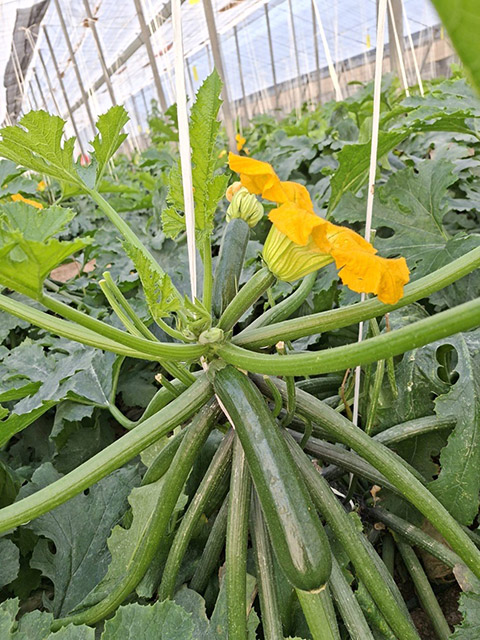
Today, growers already have access to resistant solutions within our portfolio. In greenhouse squash production, Sylmara and Nivarel provide ToLCNDV resistance combined with strong commercial performance. For open field production, Jenalee offers growers a resistant alternative adapted to their cultivation conditions. These varieties demonstrate that resistance is not a future ambition, but a practical tool already helping growers manage virus pressure while maintaining productivity and crop reliability.
In other crops like melon, the journey is still ongoing. While promising progress has been made, resistant material is currently being tested across several melon typologies. This reflects both the complexity of the challenge and our continued commitment to developing robust, commercially relevant solutions for growers in the future.
"What makes this work special is not a single experiment or discovery. It is the collaboration behind it: bringing together people, crops and environments to build solutions that growers can trust."
Descriptions, recommendations and illustrations in brochures and leaflets shall correspond as closely as possible to tests and practical experience and are subject to typographical and/or printing errors. This information shall be provided to assist professional growers and users, whereby variable local conditions must be taken into account. Under no circumstances shall Enza Zaden accept liability based on such information for deviating results in the cultivated product. Current information concerning the resistances is available on www.enzazaden.com.


 Back to overview